
While headlines in 2026 focus on Saudi Arabia’s giga-projects and the UAE’s construction surge, Qatar quietly remains the Gulf’s most reliable premium market for construction chemicals. Smaller in volume than its neighbours, Qatar offers something rarer in regional B2B markets: long-term stability, quality-first procurement, and tolerance for premium pricing on products that perform. Here is why suppliers who understand the Qatari market continue to invest there — and why the next five years look strong.
The Economic Foundation: Stability That Outlasts Cycles

Qatar’s macroeconomic fundamentals remain among the strongest in the region. Sovereign credit ratings sit at AA territory across major agencies, backed by some of the world’s lowest LNG production costs and one of the highest GDP-per-capita figures globally. Unlike neighbouring markets that rise and fall with construction cycles, Qatar’s revenue base is anchored by long-term LNG supply contracts — many running 20 to 27 years — that provide exceptional fiscal visibility.
Under Qatar National Vision 2030 and its operational arm, the Third National Development Strategy, the government has committed approximately USD 85 billion to infrastructure spending through 2030. The 2025 fiscal year alone allocated USD 57.7 billion to nationwide infrastructure and construction. These are not aspirational figures — they are budgeted, contracted, and progressing.
The Construction Chemicals Market at a Glance
Qatar’s construction chemicals market is valued at approximately USD 311 million in 2025 and is projected to reach USD 413 million by 2032, growing at a CAGR of 5.84%. The broader construction market is forecast to expand from USD 52.34 billion in 2025 to USD 66.74 billion by 2031, at 4.14% CAGR.
Construction chemicals are growing faster than the construction market itself. That gap — around 170 basis points — is the clearest signal of a market shifting toward higher-spec, higher-value materials.
Market analysis based on Mordor Intelligence and MarkNtel Advisors, 2026 Tweet
The reason is simple: Qatar is not building more — it is building better. With most new-build mega-projects already delivered for the 2022 World Cup, the market has shifted toward refurbishment, specialized commercial and industrial construction, and high-spec infrastructure where waterproofing, protective coatings, and sealants command premium specifications.
The Post-World Cup Market: Reality vs. Predictions
In 2023, plenty of analysts predicted Qatar’s construction market would collapse after the World Cup. The opposite happened. The market re-balanced rather than retreated. New stadium construction wound down, but a sustained pipeline of programs took its place: Lusail Phase 2 real estate continues to roll out, Hamad International Airport’s expansion is underway, the Doha Metro is extending, and Ashghal’s expressway and sewage networks are mid-execution.
What changed was the project mix. Demand shifted from high-volume new-build to a more balanced portfolio of refurbishment, commercial fit-outs, industrial maintenance, and specialized commercial buildings. This shift actually favors construction chemical suppliers, because refurbishment and maintenance work uses proportionally more concrete repair, surface treatment, and waterproofing coatings than greenfield construction does.
The North Field Expansion: The Industrial Demand Engine

If there is a single project that anchors Qatar’s construction chemicals demand for the next five years, it is the North Field expansion. The North Field East, South, and West phases combined represent over USD 50 billion in capital outlays, raising Qatar’s LNG capacity from 77 million tonnes per annum to 142 mtpa by 2030.
The numbers behind the project are staggering. Peak onsite workforce is set at 45,000 workers. Over 600,000 cubic metres of concrete will be poured on the North Field East phase alone. The first train comes online in mid-2026, with the West phase running through the end of the decade.
From a construction chemicals perspective, LNG mega-trains demand specialized materials that go far beyond standard commercial construction: industrial-grade protective coatings for cryogenic equipment areas, industrial flooring systems capable of resisting petrochemical exposure, anti-corrosion pipe wrapping for offshore-to-onshore pipelines, and high-performance sealants for joints exposed to extreme thermal cycling.
Ashghal and the Specifier Culture: Why Quality Outweighs Price
Ashghal — Qatar’s Public Works Authority — sets the tone for procurement quality across the country. Its 2025–2029 infrastructure and urban development plan, valued at USD 22.23 billion, includes major land development, drainage upgrades, public facility construction, and integrated infrastructure for newly allocated residential plots. Every one of these projects flows through Ashghal’s rigorous specification and approval process.
Qatar Construction Specifications (QCS 2014) governs material requirements across public sector projects, and compliance is non-negotiable. For suppliers, this is genuinely good news: QCS compliance acts as a quality filter that keeps low-grade imports out of the market. Once a product is QCS-compliant and consultant-approved, it can be specified across dozens of projects with minimal re-qualification. Our approvals portfolio reflects exactly this kind of long-cycle credibility that Qatari specifiers reward.
Climate Drives Specification Standards Upward

Qatar’s climate is uniquely punishing on construction materials. Three challenges stand out.
Coastal Humidity and Salinity
Doha and most major developments sit on or near the coast. Persistent humidity, airborne chloride, and salt-laden sea breeze accelerate corrosion of reinforcing steel and degrade standard waterproofing systems. This drives demand for high-performance waterproofing membranes and marine-grade protective coatings.
Extreme Heat and UV Exposure
Surface temperatures regularly exceed 50°C in summer, with intense ultraviolet radiation. Generic European-spec bitumen membranes often fail prematurely under these conditions. Qatar’s market favors APP-modified bitumen, SBS-modified systems, and high-grade bitumen primer formulations engineered specifically for Gulf climates.
Sulfate-Rich Soils and High Water Tables
Coastal Qatari soils often contain high sulfate concentrations, attacking standard concrete from below. Combined with elevated water tables in low-lying areas around Doha, this makes specialized below-grade protection essential. Concrete repair systems, pile head treatment, and water stoppers are consistently specified across substructure works.
Why "Premium" Actually Means Premium in Qatar
Suppliers entering Qatar from the UAE or Saudi Arabia are often surprised by the pricing tolerance. Qatar’s specifiers and contractors are willing to pay genuine premiums for proven products — provided the documentation, performance data, and after-sales support are credible.
Three factors create this premium pricing environment.
Specification governance. When QCS-compliant products are written into specifications by consultants like Parsons, AECOM, or KEO, contractors don’t substitute for cheaper alternatives — the specification holds. This insulates suppliers from race-to-the-bottom price competition.
Project economics. Qatari construction projects typically operate on higher overall budgets per square meter than equivalent projects in other GCC markets. Materials are a smaller percentage of total project cost, so saving 10% on construction chemicals is rarely worth the specification risk.
Long-term relationships. Qatar’s construction sector runs on long-term consultant–contractor–supplier relationships. A supplier who delivers consistently across three or four projects becomes a default specification — pricing pressure eases considerably once that status is achieved.
Strategic Product Categories Suppliers Should Watch
Based on Ashghal’s pipeline, the North Field LNG expansion, and ongoing commercial development, the following product categories are seeing the strongest specification activity in the Qatari market:
- Concrete admixtures — the largest single segment, driven by extreme-heat concrete pouring
- Waterproofing membranes — SBS and APP-modified bitumen for substructure and roof
- Liquid waterproofing coatings — polyurethane and acrylic systems
- Protective coatings — marine and industrial grades for the petrochemical and LNG sector
- Sealants — polyurethane and polysulphide for joints in infrastructure and facades
- Concrete repair mortars and bonding agents — increasingly important in the maintenance cycle
- Industrial flooring — epoxy and polyurethane systems for warehouses, car parks, and industrial facilities
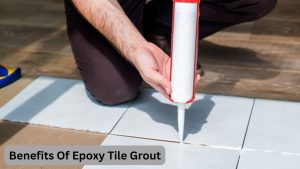
- Epoxy tile grout — hospitality and high-end residential sector demand
- Insulation boards — driven by energy efficiency regulations
- Joint fillers and water stoppers for substructure and water-retaining structures
Supplying to a Qatari Project?
Qatar vs. Saudi Arabia: Two Different Markets, Two Different Strategies
Saudi Arabia and Qatar are often grouped together as "Gulf markets," but for construction chemicals suppliers they require fundamentally different strategies. Saudi Arabia is the largest single market in the region — roughly 35% of total Middle East construction chemicals demand — and is growing fastest under Vision 2030’s giga-project programme. We explored this in detail in our piece on Saudi Vision 2030 and its impact on waterproofing demand.
Qatar is smaller in volume but offers higher per-project margins, longer supplier relationships, and a more stable specification environment. The right strategic answer is not to choose between them — it is to size your investment in each market according to its character. Saudi Arabia rewards scale and aggressive market presence; Qatar rewards quality, documentation, and long-term commitment.
Strategic Implications for Suppliers Entering Qatar

The Qatari market is open to new entrants, but it is not casual. Suppliers who succeed consistently demonstrate four things.
QCS 2014 Compliance
Qatar Construction Specifications compliance is the gatekeeper. Products without QCS alignment or equivalent international standards documentation are filtered out at specification stage. Investment in compliance documentation pays back across many projects.
Local Representation
Qatar’s commercial code generally requires foreign suppliers to operate through a Qatari agent or local partner. This is not just regulatory — it is practical. Local representatives manage relationships with consultants, navigate Ashghal approvals, and provide the after-sales presence that specifiers expect.
Documentation Beyond Compliance
Environmental Product Declarations, low-VOC certifications, GSAS (Global Sustainability Assessment System) alignment, and full technical data sheets in Arabic and English are increasingly precondition rather than nice-to-have. Our work with approved manufacturers — and the certifications detailed on our approvals page — reflects this standard.
Patience and Pipeline Thinking
Qatar rewards multi-project relationships. Suppliers expecting transactional, one-off project wins typically struggle. Suppliers willing to invest in two to three years of credentialing, sampling, and relationship-building typically establish positions that last a decade or more.
Frequently Asked Questions
Is Qatar's construction market really stable after the World Cup?
Yes — but the market has changed character rather than maintained its 2018–2022 form. Volume of new-build mega-projects has dropped, but it has been replaced by a sustained pipeline of infrastructure, refurbishment, LNG industrial construction, and specialised commercial development. The Third National Development Strategy commits approximately USD 85 billion through 2030, and the construction chemicals market is forecast to grow at 5.84% CAGR through 2032 — faster than the underlying construction market itself.
How does Qatar compare to Saudi Arabia and the UAE for construction chemicals suppliers?
Saudi Arabia is the largest and fastest-growing market — best for suppliers pursuing scale. The UAE is the strategic regional hub with the most mature distribution infrastructure. Qatar is smaller but offers higher per-project margins, longer supplier relationships, and a quality-first specification culture. Most successful regional suppliers operate in all three, but with different commercial structures in each.
What is QCS 2014 and why does it matter?
Qatar Construction Specifications (QCS 2014) is the technical specification framework governing material requirements on public sector and most private sector projects in Qatar. Suppliers without products meeting QCS standards — or equivalent international standards with documented cross-references — are effectively locked out of the major project pipeline. QCS compliance is therefore the single most important market-entry investment for a new supplier.
Which projects will drive construction chemicals demand in Qatar over the next five years?
The North Field LNG expansion (NFE, NFS, NFW) is the largest single driver, with over USD 50 billion in capital outlays through 2030. Beyond that: Hamad International Airport expansion, Doha Metro phase expansions, Ashghal’s expressway and sewage networks, Lusail Phase 2 real estate, and a growing pipeline of healthcare, education, and data-center facilities under Qatar National Vision 2030.
Do foreign suppliers really need a Qatari agent or can they sell direct?
For most construction chemicals categories, operating through a Qatari agent or local partner is both legally required and commercially advisable. Direct cross-border sales are possible in limited cases but face significant disadvantages in tendering, approvals, and after-sales service expectations. The standard regional model is to appoint a Doha-based partner with warehousing, technical staff, and relationships with key consultants and contractors.
Conclusion
Qatar is not the loudest construction market in the Gulf, and that is precisely its appeal. While larger markets reward aggressive expansion and tolerate higher commercial risk, Qatar rewards patience, quality, and long-term partnership. Its construction chemicals market is smaller but more durable; its specifiers are stricter but more loyal; its margins are higher and more defensible.
For suppliers willing to invest in QCS compliance, local representation, and specification-grade documentation, Qatar remains one of the most attractive premium markets for construction chemicals anywhere in the Middle East — and the North Field expansion, the Ashghal infrastructure pipeline, and the steady commercial development agenda ensure that this will hold through 2030 and beyond.
At Yaseen, I work with leading manufacturers and distributors across the Middle East to supply waterproofing, bitumen, construction chemicals, and specialised building materials to projects across Qatar and the wider region. If you are specifying or sourcing for a Qatari project, get in touch.